
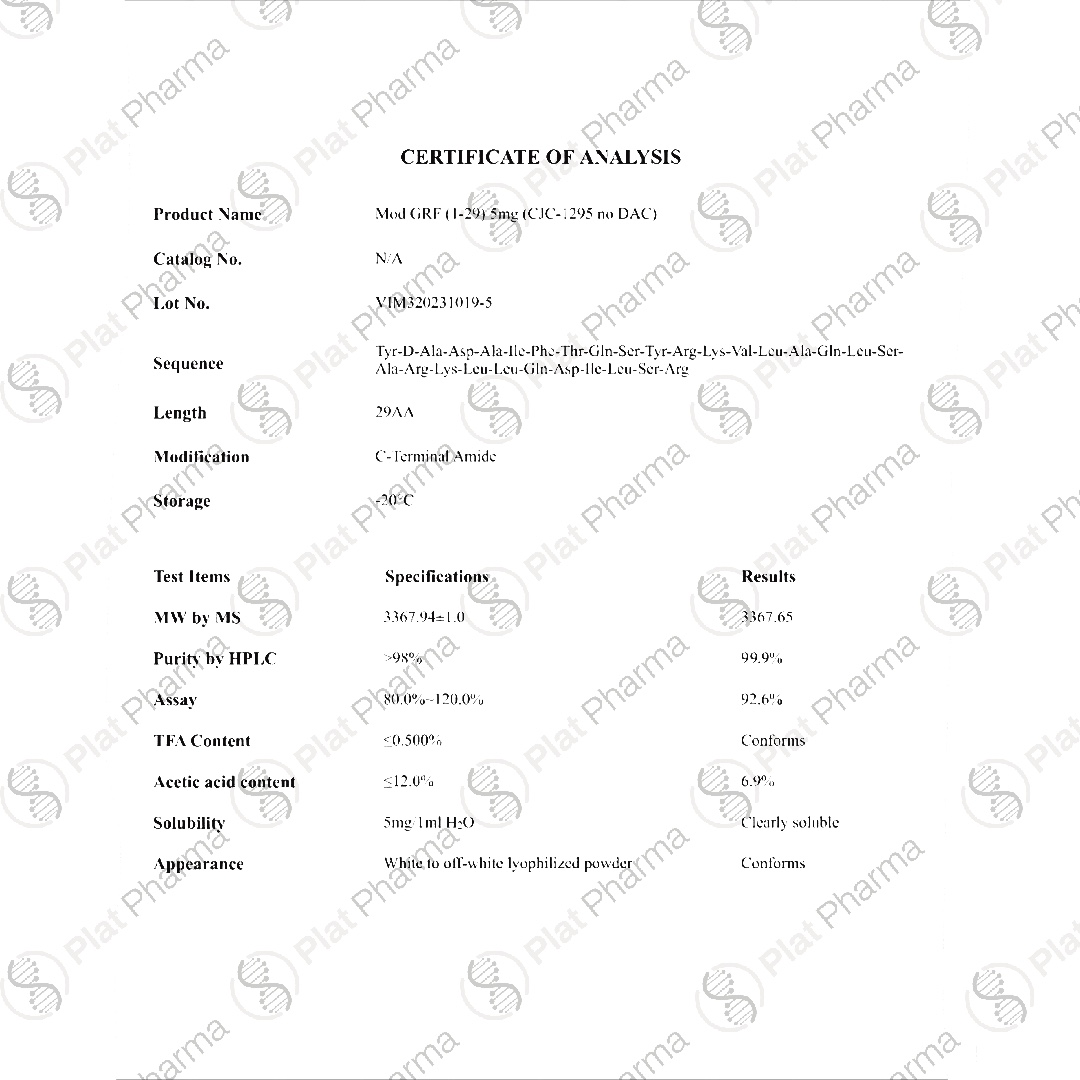
At PlatPharma, we prioritize quality by using both High-Performance Liquid Chromatography (HPLC) and Assay testing for our peptides. While many competitors rely solely on HPLC results to showcase purity, we go further to ensure both purity and potency with Assay testing. Here’s why these methods are crucial for delivering top-grade peptides.
HPLC Testing: Ensuring Purity
High-Performance Liquid Chromatography (HPLC) is widely used to confirm peptide purity. In HPLC, peptides are separated by their chemical properties in a high-pressure column, revealing any impurities in the sample..
- Purpose: Identifies impurities to ensure a high purity percentage.
- Importance: High purity, typically 95% or higher, is essential for research-grade peptides.
Assay Testing: Verifying Potency
Assay Testing measures the concentration of the active peptide, confirming that the potency aligns with targeted specifications. Unlike HPLC, which focuses on purity, Assay testing verifies the product’s actual strength.
- Purpose: Confirms that the active peptide meets the intended concentration.
- Importance: Reliable potency is critical, especially in research applications.
Key Differences: Why Both Tests Matter
While HPLC provides a purity percentage, Assay testing ensures the active ingredient’s potency, so the product performs as expected. By using both methods, PlatPharma ensures each peptide is both pure and potent, offering more comprehensive quality control than competitors who may rely on HPLC alone.
| Testing Method | Focus | Purpose |
| HPLC | Purity | Identifies impurities |
| Assay | Potency | Confirms active concentration |
Why PlatPharma Stands Out
While many suppliers may advertise HPLC results, they often skip Assay testing, which leaves potency unverified. At PlatPharma, we provide both, giving clients confidence that each product meets rigorous standards for purity and strength, making us a trusted choice in peptide quality.